
The primary pain point for many store owners is the illusion of low-cost entry. Page builders like Elementor or Divi offer an incredibly low barrier to entry, allowing merchants to build beautiful storefronts without a developer. However, this convenience comes with a hidden technical debt. These tools often generate excessive DOM depth, bloated CSS, and heavy JavaScript payloads. From a financial perspective, this translates directly into conversion leakage. As page load speeds decrease, the bounce rate increases, effectively raising your Customer Acquisition Cost (CAC) because you are paying for traffic that leaves before the page even renders.
On the opposite side of the spectrum, custom-coded templates require a significantly higher upfront capital expenditure (CAPEX). Hiring developers to craft lightweight, semantic HTML and optimized CSS is expensive and time-consuming. Yet, from a long-term operational standpoint, these templates offer a superior Return on Investment (ROI). By optimizing the Largest Contentful Paint (LCP) and reducing server resource consumption, coded templates stabilize your Operating Expenses (OPEX) and maximize the lifetime value of every visitor.
The Hidden Cost of Technical Architecture
The financial tension lies in the trade-off between speed-to-market and conversion efficiency. A page builder might allow you to start selling in a week, but if your site performance causes a 20% drop in checkout completions, the "savings" on development are quickly erased by lost revenue. Conversely, an overly complex custom build might be so expensive that it drains your marketing budget before you even launch.
Furthermore, heavy page builders increase the load on your hosting environment. As your traffic grows, the server overhead required to process bloated plugin queries can lead to higher hosting costs or the need for more expensive, high-performance VPS solutions. This creates a cycle where inefficient code directly erodes your net profit margins.
The Transition from Interface to Intelligence: Solving Financial Blindness
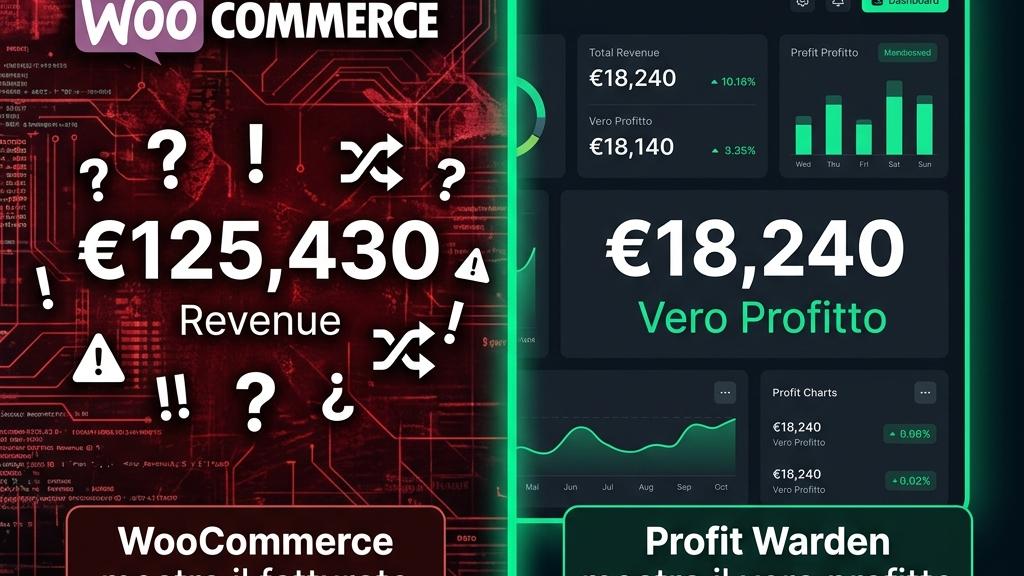
However, even if you solve the architectural debate by choosing the perfect template, a new and much more dangerous problem emerges: financial blindness. Many WooCommerce owners successfully manage their front-end performance but remain unaware of the silent margin killers happening in their backend. You may have a lightning-fast store with high conversion rates, yet still find your bank account depleting due to unmonitored costs.
The most common culprits are unintegrated COGS (Cost of Goods Sold), where SKU-level profitability is ignored; payment gateway friction, where the variable fees from Stripe or PayPal are not factored into the final margin; and logistics volatility, where the gap between what a customer pays for shipping and the actual courier cost destroys your bottom line.
Introducing Profit Warden: Your Digital CFO
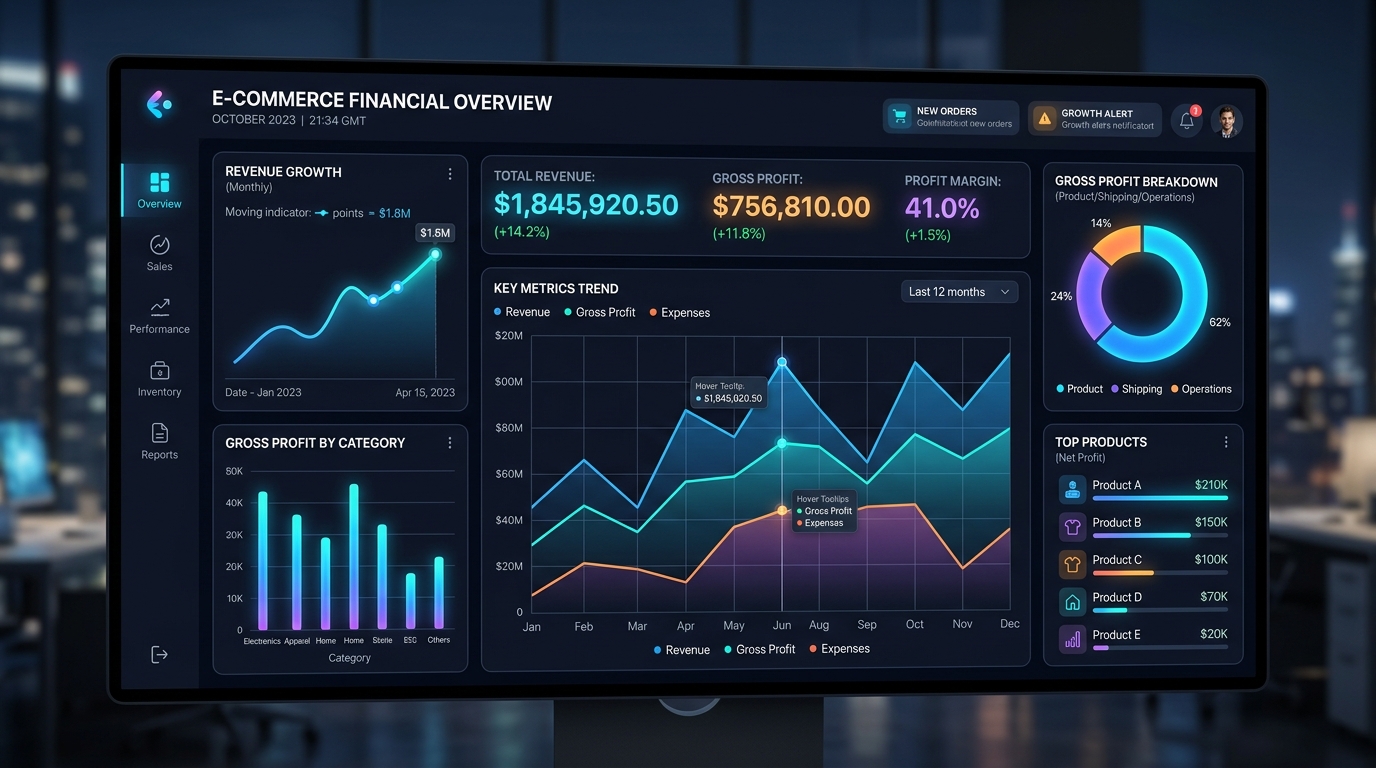
To navigate this complexity, modern e-commerce management requires more than just a good template; it requires a Digital CFO. This is where Profit Warden enters the ecosystem. Designed as a Business Intelligence Middleware, Profit Warden moves beyond simple revenue tracking to reveal your true net profit.
Unlike standard WooCommerce reports that celebrate vanity metrics like total turnover, Profit Warden utilizes a sophisticated decoupled architecture. By leveraging FastAPI (Python) for high-concurrency analytical processing, it avoids slowing down your WordPress database while providing deep insights through an external Streamlit dashboard. It allows you to track the Daily Burn Rate and implement a 5-stage roadmap toward total financial command—from basic security and operational accounting to advanced predictive intelligence.
Profit Warden specifically targets the gaps left by traditional plugins. It integrates marketing data from Meta and Google Ads to calculate true POAS (Profit On Ad Spend), ensuring you know exactly which campaigns are profitable and which are simply generating expensive revenue. With its chromatic verdict system (Green for Profit, Yellow for Watch, Red for Loss), it provides immediate visual feedback on the health of every single order.
By integrating automated tax compliance for EU/UK VAT and USA Sales Tax, along with advanced SKU-level performance matrices, Profit Warden transforms your store from a simple storefront into an enterprise-grade profit engine. Whether you choose a page builder or a custom template, the goal remains the same: sustainable profitability. With Profit Warden, you finally stop guessing and start leading.