
However, most store owners fall into a dangerous trap: they calculate Return on Investment (ROI) based solely on vanity metrics. They look at the increase in gross revenue and assume success. This is a fundamental error in financial management. In the complex ecosystem of modern e-commerce, revenue is merely an indicator of activity, not an indicator of profitability. The true challenge lies in determining whether that aesthetic upgrade actually increased your bottom line or simply increased your volume of expensive, low-margin transactions.
The Illusion of Conversion Gains
The difficulty in calculating the real ROI of a template lies in the hidden variables that fluctuate alongside sales. When a new template improves the user interface and drives more traffic to complete a purchase, it simultaneously changes the landscape of your operational costs. Many owners fail to account for the hidden friction that accompanies scaling. For instance, an increase in orders might lead to higher payment gateway fees from providers like Stripe or PayPal, which are often ignored in standard reporting.
Furthermore, a more "feature-rich" premium template can sometimes impact site performance if not implemented correctly. While the visual appeal increases, any slight degradation in load speed can affect your Customer Acquisition Cost (CAC) by reducing the efficiency of your paid advertising. If you are spending more on Meta or Google Ads to drive traffic to a new template, but your Net Profit remains stagnant because you haven't accounted for the increased cost of processing these larger volumes, your "successful" investment is actually eroding your capital.
The real ROI formula should not be: (New Revenue - Old Revenue) / Cost of Template. Instead, it must be: (New Net Profit - Old Net Profit) / Cost of Template. To achieve this, an entrepreneur must have visibility into the granular details of every transaction, including COGS (Cost of Goods Sold), shipping discrepancies, and variable overheads.
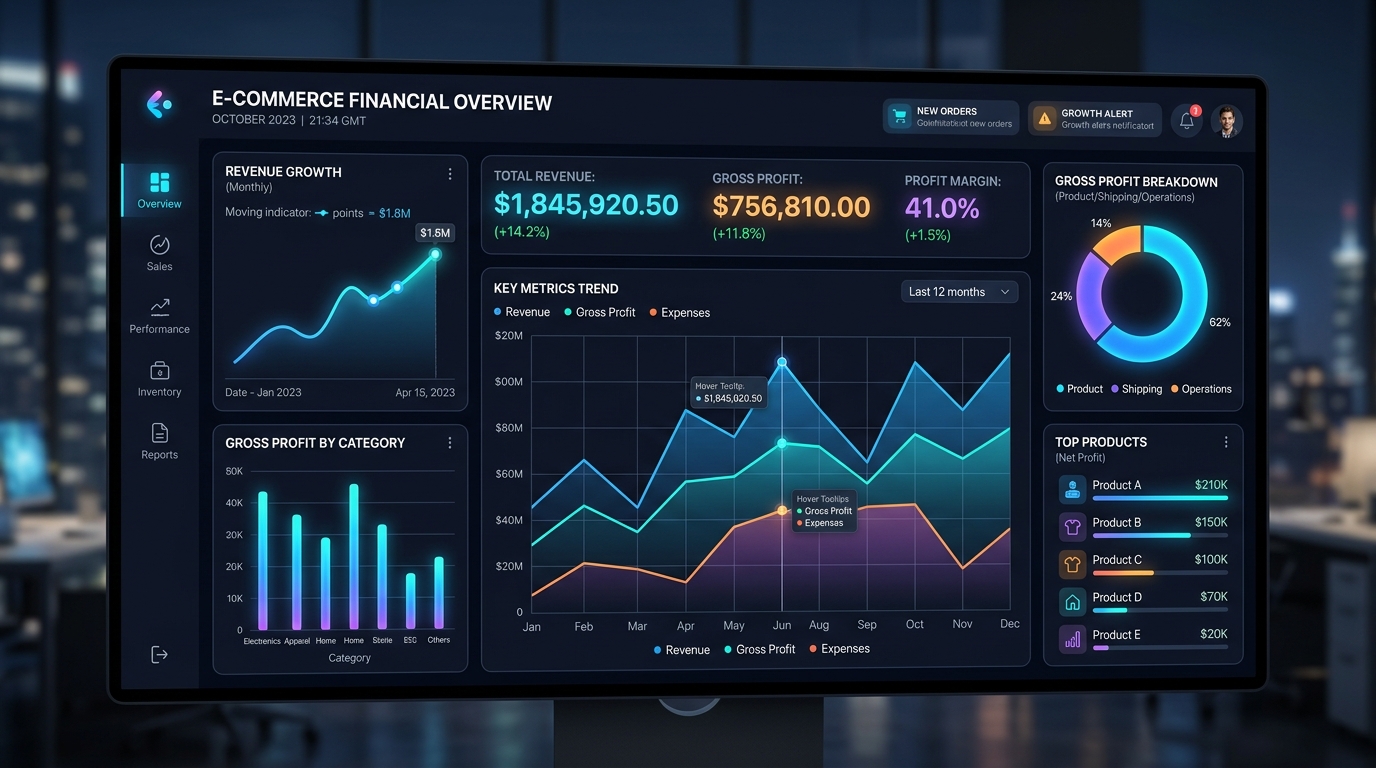
Bridging the Gap with Financial Intelligence
To move beyond financial blindness, e-commerce managers need to transition from basic reporting to true Business Intelligence. This requires a shift in perspective—moving away from seeing a store as a collection of sales and starting to see it as a complex engine of margins. As your technical stack grows with premium templates and plugins, your ability to track the Daily Burn Rate and the true profitability of each SKU becomes the most critical factor in your survival.
This is where Profit Warden enters the ecosystem as a Digital CFO