Pros: Exceptional responsive architecture, SEO-optimized code structure, and a feature-rich module set.
Cons: Heavy dependency on third-party extensions and a potential learning curve for non-technical users.
Responsive Design and User Experience
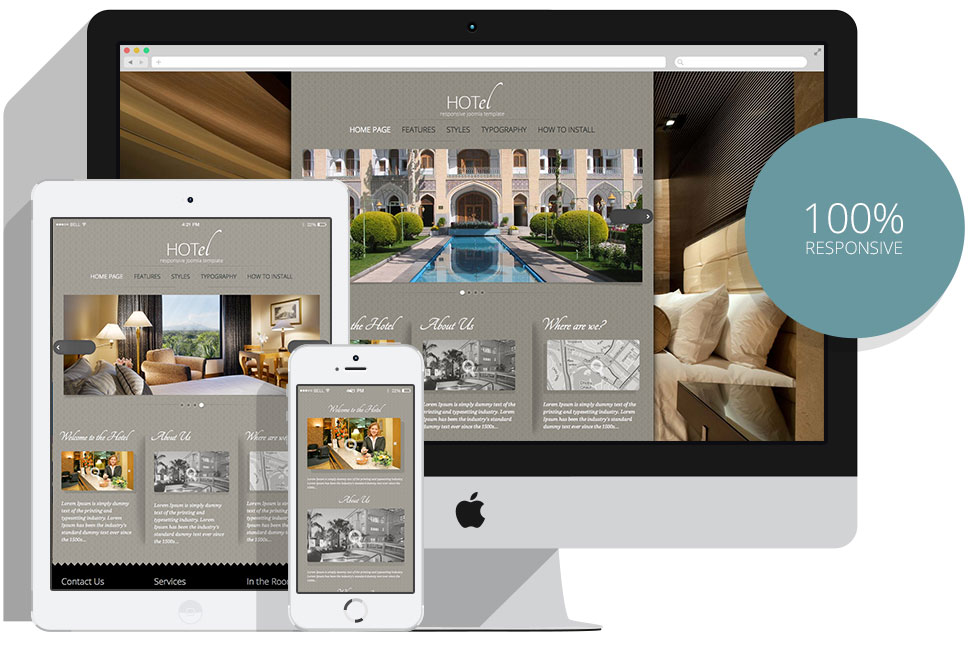
Modern travelers rely on mobile devices for browsing. The Hotel Template prioritizes a mobile-first philosophy. It utilizes a fluid grid system. This system ensures seamless rendering across smartphones, tablets, and desktops. The layout adapts dynamically to different viewport dimensions.
The visual hierarchy is expertly crafted. Large, high-quality imagery is given prominence. This is essential for the hospitality industry. High-resolution photos of rooms and amenities drive user engagement. The navigation menu is intuitive and lightweight. It minimizes user friction during the exploration phase. Furthermore, the use of CSS3 animations provides a smooth, modern feel. These transitions are subtle. They do not compromise page loading speeds.
Feature Integration and Functionality
The template operates on a module-driven architecture. This allows for granular control over content placement. It includes specialized modules tailored for hotel management. Notable features include booking inquiry forms, service galleries, and contact interfaces. These modules are integrated into the Joomla core ecosystem. This makes content updates straightforward for administrators.
The integration of Google Maps is a significant advantage. It facilitates local SEO and assists guest navigation. The template also supports dynamic content sliders. These sliders allow for the promotion of seasonal offers and special packages. The image optimization capabilities within the template help maintain high performance. This prevents large file sizes from degrading the user experience.
Technical SEO and Performance Metrics
Search engine visibility is paramount for hotels. The Hotel Template employs semantic HTML5. This ensures that web crawlers can easily parse the content hierarchy. Proper use of header tags (H1, H2, H3) is baked into the architecture. This assists in indexation accuracy.
The underlying code is clean and minified. This reduces the total payload of the webpage. Fast loading is a critical ranking factor for Google. The template also adheres to W3C web standards. This ensures cross-browser compatibility. Whether a user utilizes Chrome, Safari, or Firefox, the rendering remains consistent. Additionally, the template is built to support metadata management. This allows developers to implement schema markup for rich snippets in search results.
Critical Analysis of Weak Points
No software architecture is flawless. The primary weakness is the reliance on external extensions. To achieve the full functional potential of the template, users must install specific plugins. This creates a maintenance burden. If an extension becomes deprecated or unsupported, the entire site structure may suffer. Developers must actively manage plugin updates to prevent security vulnerabilities.
Furthermore, the customization depth presents a challenge. While the template is highly configurable via the Joomla administrator interface, deep styling is difficult. Advanced layout changes require significant CSS knowledge. Users without technical expertise may find themselves limited by the template's structure. The complexity of the override system can also be daunting for beginners. Therefore, while powerful, the template demands a certain level of web development proficiency.
In conclusion, the Hotel Template is a robust solution for hospitality businesses. It excels in visual presentation and SEO readiness. However, users must be prepared to manage the technical dependencies and the learning curve associated with advanced customizations.